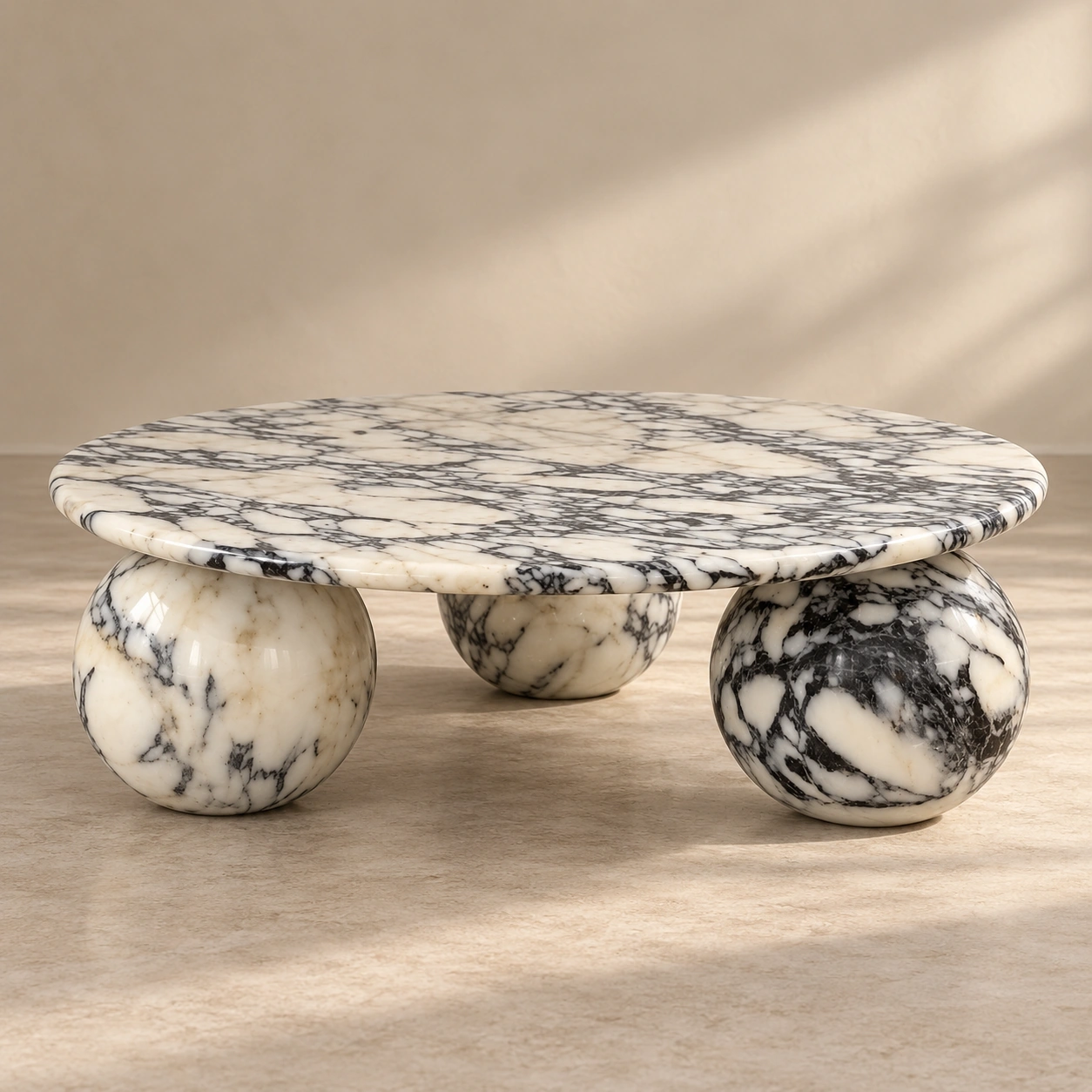
Care for marble furniture with gentle cleaning, spill protection and sensible sealing advice. Learn the difference between stains, etching and finish restoration.
Marble furniture is made for everyday interiors, but its surface benefits from a consistent, gentle routine. The most useful care habits are simple: protect the stone, remove spills promptly and use products intended for natural stone.
Daily cleaning
Remove loose dust with a soft cloth. For everyday dirt, use a damp microfibre cloth and a suitable pH-neutral stone cleaner as directed by its manufacturer. Wipe away cleaner residue and dry the surface rather than leaving standing water.
Avoid vinegar, lemon cleaners, descalers, abrasive powders and scouring pads. A product that is suitable for ceramic or glass may still damage marble. Read our marble table cleaning guide for a focused routine.
Protect against spills, heat and scratches
Use coasters under drinks, mats under place settings and felt beneath decorative objects. Keep hot cookware off the stone and lift items instead of dragging them. Blot spilled liquids without spreading them over a larger area.
Wine, citrus, vinegar and other acidic substances can dull the surface. A sealer is not a substitute for prompt cleaning and does not make marble resistant to acid.
Staining and etching are different
A stain changes the colour within the stone; an etch changes the surface finish, often leaving a dull patch or ring. They can occur together and require different treatment. Do not assume every visible ring needs a stain remover.
For a persistent mark, photograph it and identify the spilled substance if known. Avoid experimenting with household acids, solvents, bleach mixtures or homemade abrasive treatments. Our stain guide explains when to involve a stone-care professional.
When does marble need sealing?
The appropriate treatment and interval depend on the specific stone, finish, existing treatment, cleaner and level of use. Follow the advice supplied for your piece and the compatible product’s instructions rather than a universal six- or twelve-month schedule.
Impregnating treatments can reduce liquid absorption; they do not make the surface completely stain-proof or prevent etching. Do not apply a new treatment over an unknown existing coating without advice.
Honed and polished finishes
Polished marble reflects light, which can make dull patches more noticeable. Honed marble has a softer sheen, but it is not immune to stains, scratches or etching. Both benefit from the same gentle cleaning and protective habits.
Routine household polishing is not necessary. If the finish needs restoration, use a professional familiar with the particular stone and the intended sheen. See our finish comparison.
Moving and maintaining stone furniture
Do not lift a table by unsupported edges or drag it across the floor. Stone furniture may require professional handling, especially when the top and base are separate components. Ask for handling advice before moving the piece.
For product-specific guidance, refer to DLA Stone Product Care or contact us with the product name, stone, finish and photographs.