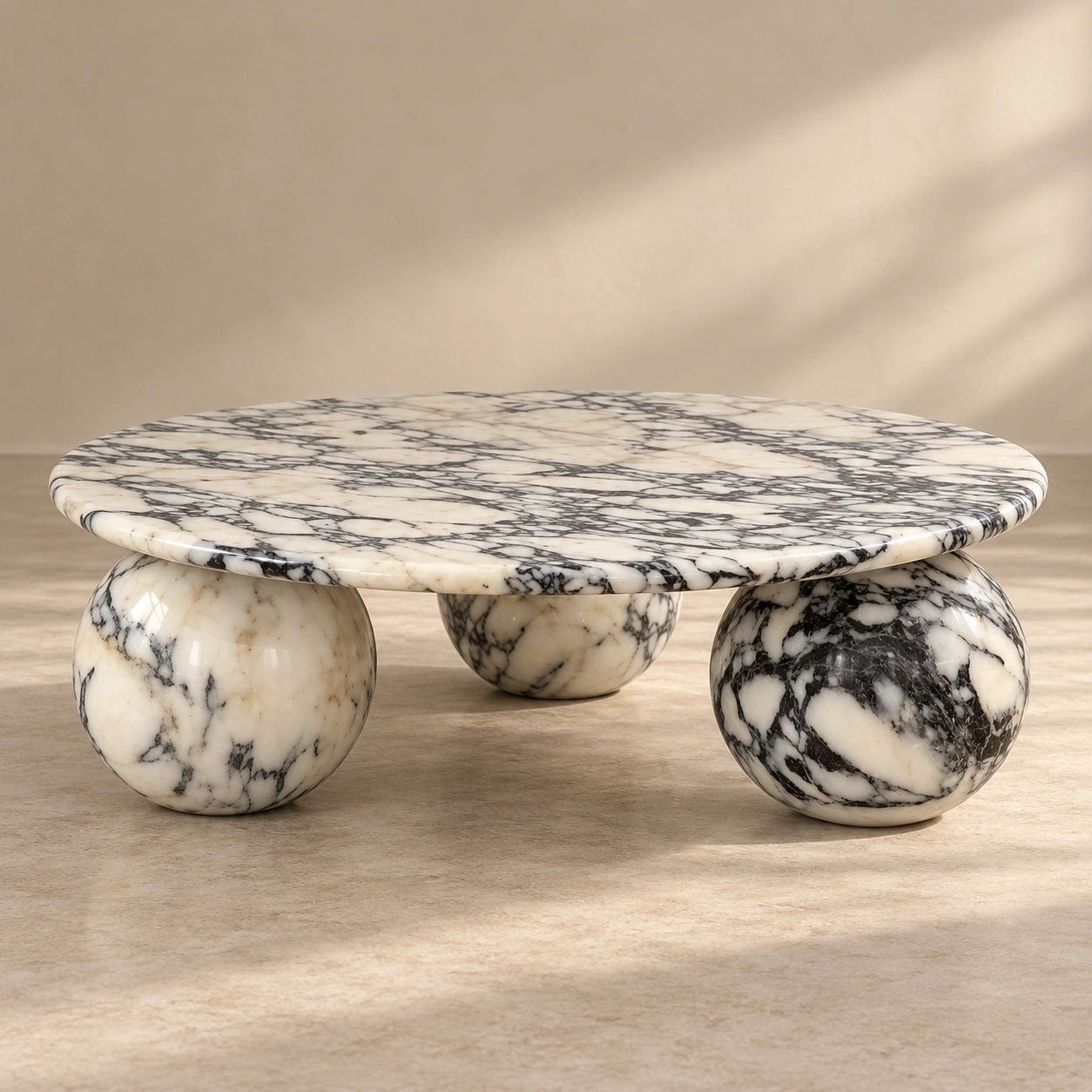
Identify marble stains and distinguish them from etching. Learn safe first steps for spills and when to contact a stone-care professional for treatment.
Before trying to remove a mark from a marble table, identify what it is. A stain has entered the pores and changed the colour of the stone. Etching is physical damage to the finish caused by acid. Treating an etch mark as a stain wastes time and can make the surface worse.
Is it a stain or an etch mark?
Stains usually appear darker or carry the colour of the substance that caused them. Etching often looks pale, cloudy or dull and may feel slightly different under the fingertips. View the mark from an angle. If reflected light disappears in that spot, etching is likely.
Act quickly
Blot fresh spills with a white absorbent cloth. Do not scrub. Rinse lightly with clean water and dry the area. Removing excess liquid quickly reduces the time available for it to enter the stone.
Water and moisture marks
A temporary dark patch may simply be moisture. Remove objects from the area and allow the stone to dry naturally. Do not apply direct heat. If the mark remains after the stone is fully dry, seek advice before using a treatment.
Oil and grease stains
Oil can produce a darker patch. A professional poultice may draw absorbed oil towards the surface, but the correct formula and dwell time depend on the stone and finish. Avoid experimenting with strong solvents on finished furniture.
Wine, coffee and food stains
Organic stains may leave brown, pink or yellow discolouration. Clean the surface first with a pH-neutral stone cleaner. If colour remains, contact the maker or a stone restoration specialist for a suitable poultice. Do not use lemon, vinegar or bleach.
Rust-coloured marks
Rust can originate from metal objects, mineral content within the stone or moisture reaching an internal fixing. Rust removers are often acidic and can severely etch marble. This type of mark should be professionally diagnosed.
Why common home remedies are risky
Baking soda, vinegar, lemon and abrasive pastes are widely recommended online, but they can alter sheen, scratch the finish or cause chemical damage. A treatment that appears successful on one stone may discolour another. Natural stone varieties differ in porosity and mineral composition.
What sealing can do
An impregnating sealer can slow the absorption of liquids, giving you more time to clean a spill. It does not form an indestructible coating and it does not prevent acid etching. Resealing frequency depends on the stone, treatment and level of use.
When professional restoration is needed
Call a specialist if a mark is large, old, oily or combined with loss of shine. A professional can identify the stone, test a small area and refinish the surface when necessary. Polished marble may require mechanical repolishing; honed marble may need local or full-surface rehoning.
Preventing future stains
- Use coasters and placemats.
- Blot spills immediately.
- Keep plant pots and metal objects on protective pads.
- Clean only with pH-neutral products.
- Ask the manufacturer about sealing and maintenance.
Correct identification is the most important step. If you are unsure, send clear photographs to a stone professional before applying any product.