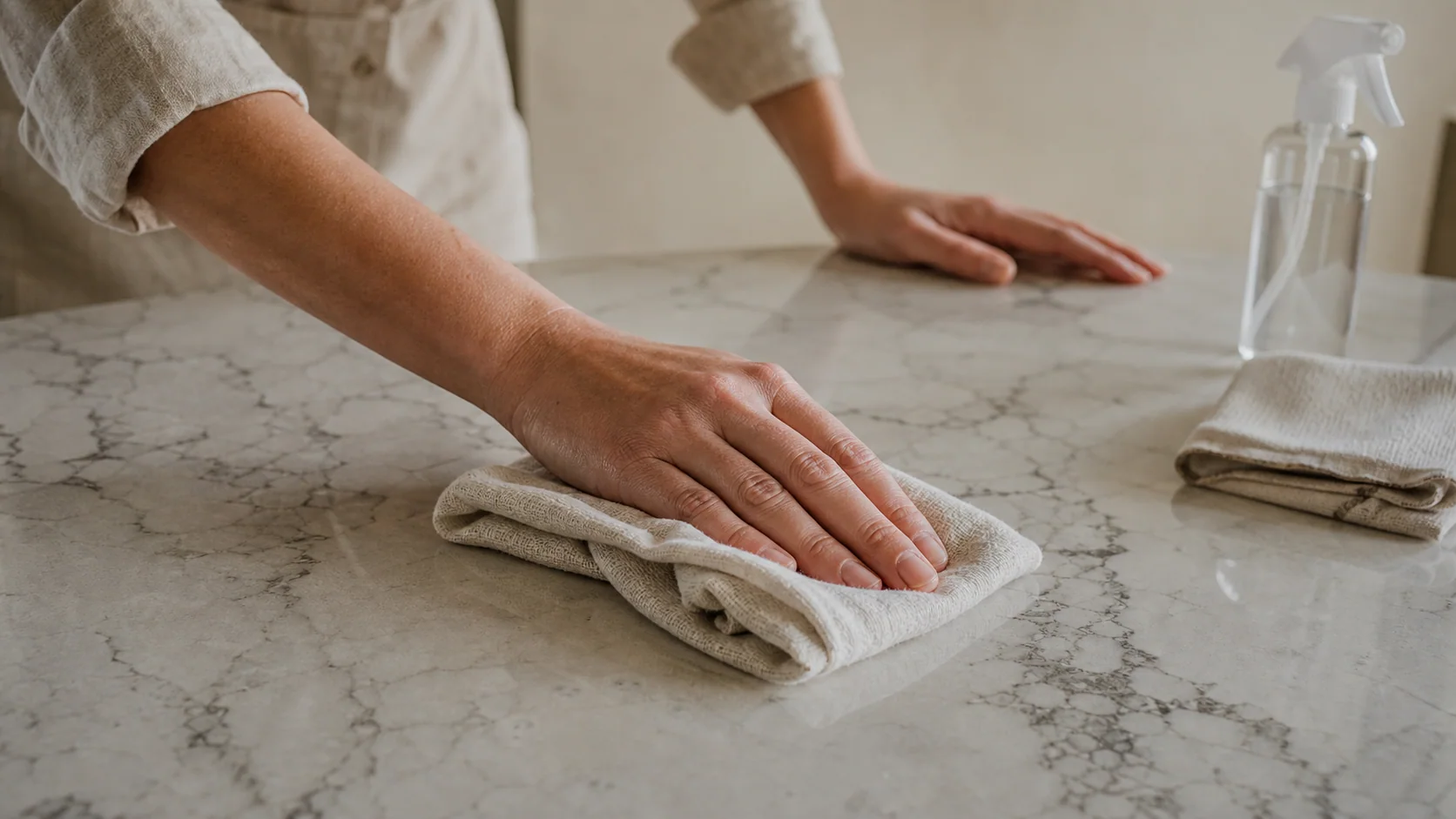
Clean a marble table without harsh chemicals or abrasives. Follow a gentle daily routine, blot spills and know when a mark needs professional attention.
The safest way to clean a marble table is simple: use a soft cloth, warm water and a pH-neutral cleaner made for natural stone. Marble does not need aggressive chemicals. In fact, many ordinary household cleaners can dull or etch its surface.
Daily marble table cleaning
Remove dust and crumbs with a clean, dry microfibre cloth. For a fuller clean, dampen the cloth with warm water and a small amount of pH-neutral stone cleaner. Wipe the surface gently, then dry it with a second cloth so water does not remain around edges or objects.
What not to use on marble
Avoid vinegar, lemon, bleach, descaling products, abrasive powders and bathroom cleaners. Do not use rough sponges or scouring pads. Marble contains calcium carbonate, which reacts with acids. A product can be natural or environmentally friendly and still be unsuitable for stone.
How to clean a fresh spill
Blot rather than rub. Rubbing can spread wine, coffee, oil or sauce across a larger area. Lift the liquid with an absorbent white cloth, rinse the area lightly with clean water and dry it. Coloured cloths can transfer dye, especially onto pale stone.
Water marks, stains and etching are different
A dark patch may be temporary moisture or an absorbed stain. A pale or dull area is often etching, which is a change to the stone finish caused by acid. Cleaning cannot remove an etch mark because the surface itself has changed. Persistent damage should be assessed by a professional stone restorer.
Should you use washing-up liquid?
A tiny amount of mild, neutral soap can be used occasionally, but repeated use may leave a film. A cleaner formulated for natural stone is easier to dose and less likely to leave residue. Whatever product you choose, test it in an inconspicuous area first.
Cleaning honed and polished marble
The same pH-neutral method applies to both. Polished marble shows loss of reflection more clearly, while honed marble may conceal minor etching but can still absorb spills. Never try to create shine with furniture polish, wax or oil unless a stone professional has recommended a compatible treatment.
A practical weekly routine
- Clear the tabletop fully.
- Dust with a dry microfibre cloth.
- Clean with warm water and pH-neutral stone cleaner.
- Dry the complete surface and edges.
- Check for new marks while the table is clear.
Protecting the table between cleans
Use coasters, placemats and trivets. Place felt pads beneath decorative objects and avoid leaving wet glasses or plant pots directly on the stone. Wipe acidic food and drink immediately. These habits matter more than frequent deep cleaning.
When to call a professional
Contact a stone specialist for deep oil stains, widespread etching, chips, cracks or a damaged polished finish. Home remedies can make restoration more difficult. For more advice, read our marble furniture care guide or contact DLA Stone.