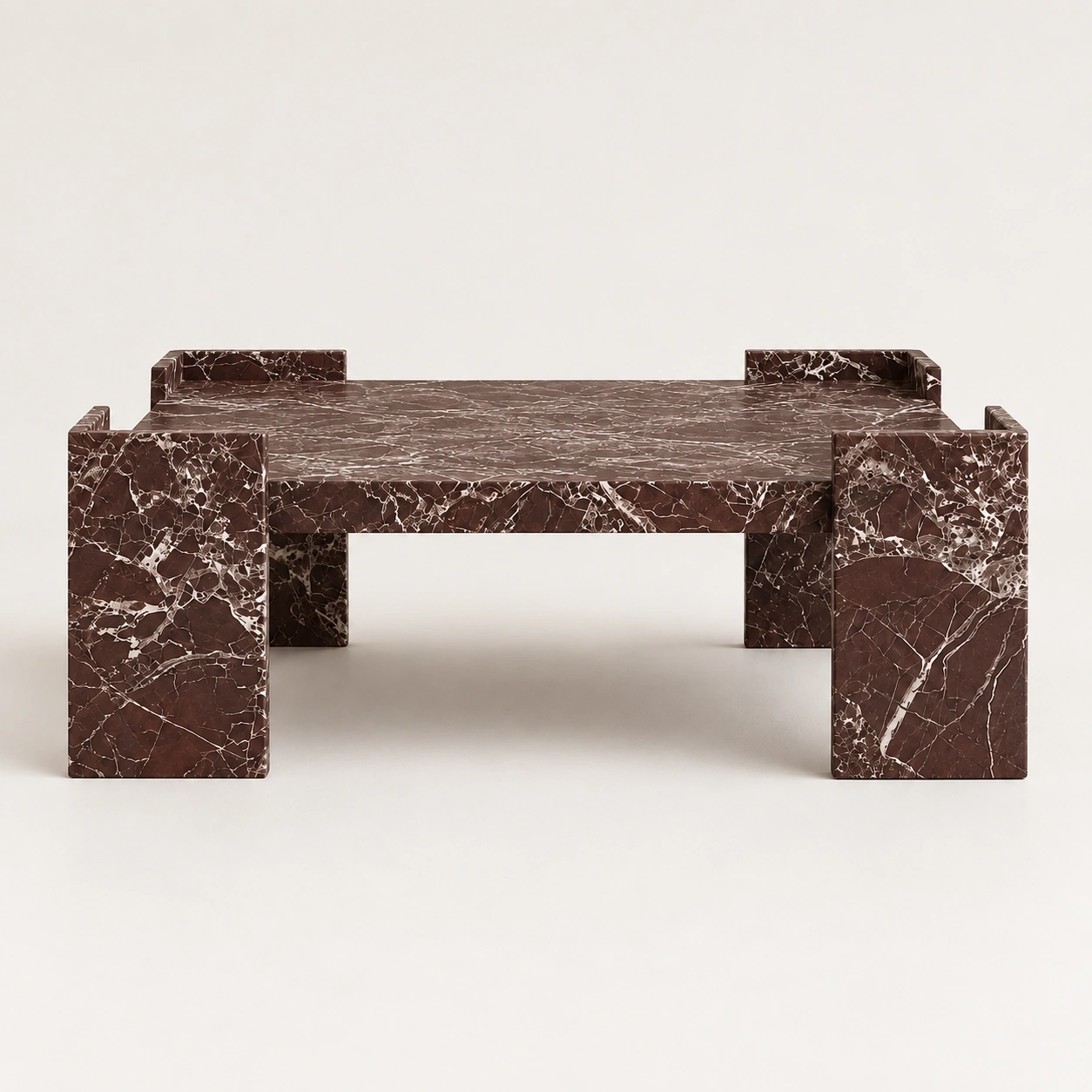
Choose a marble table with confidence: compare stone, shape, size, finish, construction and maintenance, then check delivery and the final specification.
A marble table is more than a surface. It is a piece of natural geology, cut and finished for everyday life. The right table can remain in a home for decades, but choosing one requires more than selecting a colour from a photograph. Stone type, dimensions, construction, finish and delivery all influence how the finished piece will look and perform.
Is a marble table right for you?
Real marble is valued for variation. Every slab contains its own veins, mineral movement and tonal shifts. This means the table you receive will be unique rather than identical to a digital render. Buyers who appreciate natural character, patina and material depth are usually happiest with marble.
Marble is calcium based, so acidic liquids such as lemon, vinegar and wine can etch the surface. Sealing helps slow absorption but does not make stone completely stain-proof or acid-proof. Prompt cleaning and a few simple habits are part of living with the material.
Choose the table type first
A marble dining table must balance seating capacity, circulation and structural stability. A marble coffee table should relate to the sofa height and leave comfortable walking space. Console and side tables can be more sculptural because their surfaces usually carry less daily activity.
Round, oval or rectangular?
Round tables encourage conversation and work well in square rooms. Rectangular tables use long rooms efficiently and offer clear seating positions. Oval forms soften circulation while retaining much of the capacity of a rectangular top. Always measure the room, not just the place where the table will stand. Allow space for chairs to pull back and for people to pass behind them.
How to choose a marble
White marbles such as Calacatta Viola create contrast through expressive veining. Dark stones introduce visual weight, while red and green marbles act almost like colour in an interior. Travertine offers quieter banding and a warmer architectural character. Browse the material library before deciding.
Honed or polished finish?
A honed finish is smooth with a low sheen. It feels understated and usually makes minor wear less visually prominent. A polished finish reflects light and intensifies colour and veining, but etching can be easier to notice. Neither finish removes the need for appropriate care.


Construction matters
Ask how the top is supported, how bases are connected and whether vulnerable areas are reinforced. Large stone spans require careful engineering. A visually minimal table still needs a structure designed for the weight and behaviour of natural stone.
Understand natural variation
Veins may move across an edge, small mineral inclusions may be visible and colours can vary between blocks. These are normal characteristics. For strongly patterned stones, slab selection and vein placement should be considered as part of the design.
Delivery and access
Measure doors, lifts, staircases and turning points before ordering. Confirm whether delivery is kerbside or includes room-of-choice placement, unpacking and assembly. Natural stone furniture is heavy and should be moved by an experienced team.
Questions to ask before buying
- Is the material genuine natural stone?
- Will the finished piece vary from the sample or photograph?
- What finish and sealer will be used?
- How is the top supported and reinforced?
- What are the exact dimensions and weight?
- What does delivery include?
- Can the table be made to a custom size?
The final decision
Choose a marble table for its natural character, not because you expect manufactured uniformity. When stone, proportion and construction are considered together, the result is furniture with a presence that synthetic surfaces rarely reproduce. DLA Stone pieces are made to order in Türkiye and can be configured by material and dimensions.