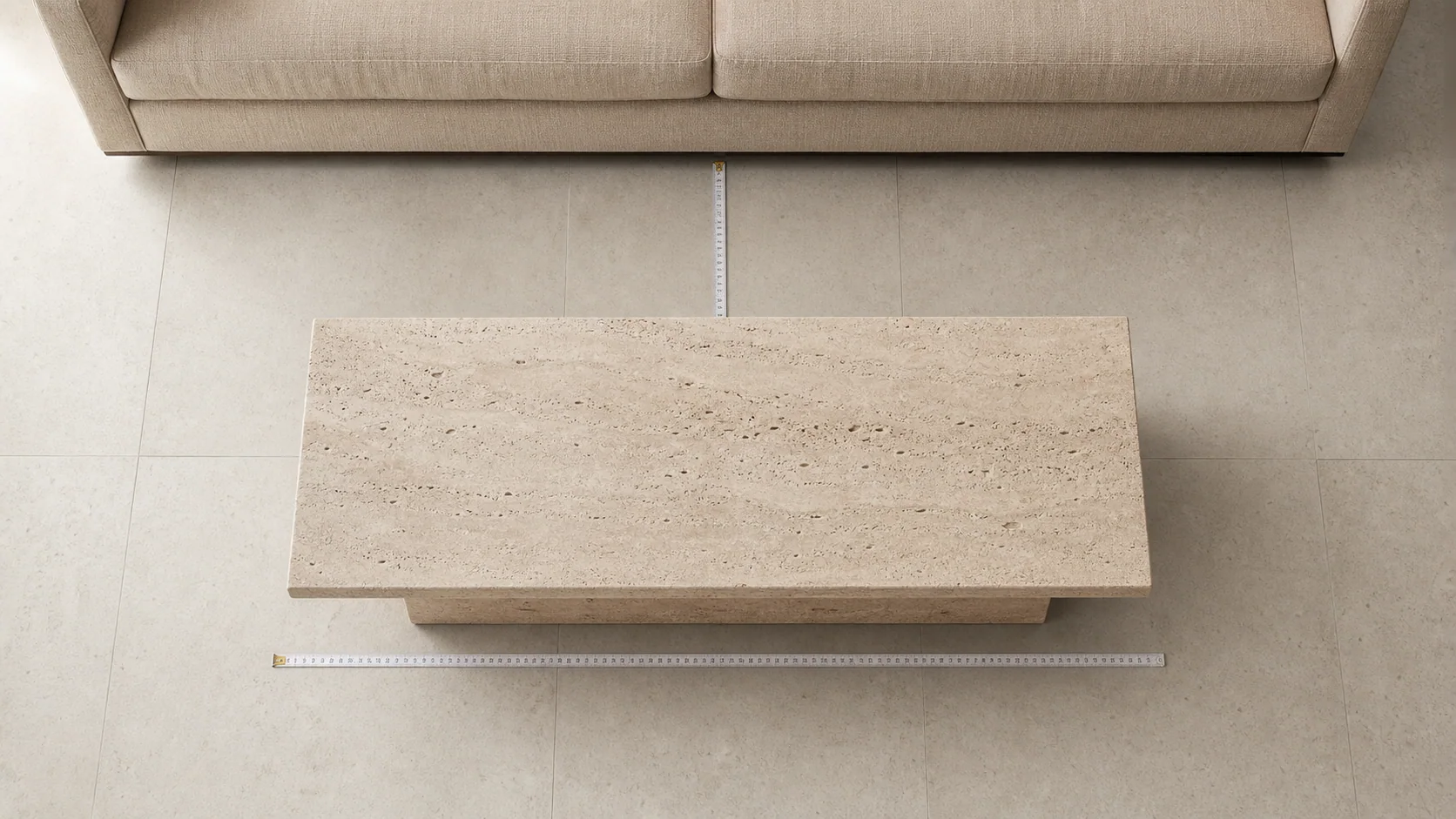
Choosing the right coffee table size is essential for creating a balanced and functional living room. This guide explains ideal coffee table length, width, height and spacing, while showing why custom natural stone furniture can create a more refined and architectural result.
How to Choose the Right Coffee Table Size for Your Living Room
A coffee table may look like a simple furniture piece, but its size can completely change the balance of a living room. When the proportions are right, the room feels intentional, comfortable and visually complete. When the table is too small, the space can feel empty. When it is too large, the room can feel crowded and difficult to move through.
This is especially important for natural stone coffee tables. Materials such as travertine, marble and limestone have a strong architectural presence. Their weight, thickness and surface character make proportion even more critical. A well-sized stone coffee table should feel integrated with the sofa, rug, seating layout and overall scale of the room.
Why Coffee Table Size Matters
The coffee table usually sits at the visual center of the living room. It connects the sofa, armchairs, rug and decorative elements into one composition. Because of this central role, even a small sizing mistake can affect the entire layout.
A coffee table that is too short may look disconnected from the seating area. A table that is too long may block movement. A table that is too high can feel uncomfortable to use, while a table that is too low may look visually weak beside the sofa.
The goal is not simply to choose a beautiful table. The goal is to choose a table that works with the room.
Ideal Coffee Table Length
As a general rule, a coffee table should be approximately two-thirds the length of the sofa. This creates a balanced relationship between the main seating element and the table.
For example, if your sofa is 240 cm long, a coffee table around 150 to 170 cm can usually create a strong proportion. If your sofa is smaller, around 180 cm, a coffee table around 110 to 130 cm may feel more balanced.
This rule is not fixed, but it is a useful starting point. The exact size should also depend on the room shape, rug size, walking space and whether there are additional armchairs or side tables in the layout.
Ideal Coffee Table Width
The width of the coffee table should allow comfortable use without blocking circulation. In many living rooms, a width between 60 cm and 90 cm works well, depending on the size of the seating area.
For narrow rooms, a slimmer rectangular coffee table may be better. For larger living rooms, a wider table can feel more grounded and luxurious. If the room has a sectional sofa or multiple seating points, a square or oversized rectangular table may create a stronger central focus.
With natural stone furniture, width also affects visual weight. A wide marble or travertine table can look extremely premium, but it needs enough space around it to breathe.
Ideal Coffee Table Height
Coffee table height should usually be close to the seat height of the sofa. In most cases, the table should be the same height as the sofa seat or slightly lower.
A typical coffee table height is usually between 30 cm and 45 cm. Lower tables can create a more modern and lounge-like atmosphere, while slightly higher tables may feel more practical for everyday use.
For natural stone coffee tables, lower and thicker proportions often create a strong architectural look. However, the height should still remain comfortable for placing drinks, books and decorative objects.
How Much Space Should Be Around a Coffee Table?
Spacing is one of the most important details in living room planning. A coffee table should be close enough to use comfortably, but not so close that it restricts movement.
As a practical guideline, leave around 40 to 50 cm between the sofa and the coffee table. This creates enough space for movement while keeping the table within easy reach.
For walkways around the seating area, more space may be needed. If people need to pass between the coffee table and another piece of furniture, the distance should feel open and natural. In smaller apartments, round or organic-shaped tables can make movement easier.
Rectangular, Round or Organic Shape?
The right coffee table shape depends on the room layout and the seating arrangement.
Rectangular coffee tables are ideal for standard sofas and long living rooms. They create a clean, structured look and work especially well with large rugs and linear furniture layouts.
Round coffee tables are useful in smaller spaces or rooms with softer furniture forms. They improve circulation and reduce sharp corners, making the room feel more fluid.
Square coffee tables work well with sectional sofas and larger seating areas. They create a strong central anchor and feel especially balanced in spacious rooms.
Organic-shaped coffee tables are ideal for interiors that want a more sculptural and artistic feeling. In natural stone, organic forms can look very premium because they highlight the material as a design object.
Why Custom Coffee Tables Create a Better Fit
Ready-made coffee tables often force the room to adapt to the product. Custom-made coffee tables allow the product to adapt to the room. This difference is especially valuable in natural stone furniture.
With a custom stone coffee table, the length, width, height, thickness, edge detail and overall form can be designed according to the interior. This creates a more refined result because the table feels like it belongs to the space rather than being added later.
For example, a large villa living room may need a bold rectangular travertine table with a thick slab profile. A compact apartment may need a lower round marble table that keeps the space open. A luxury lounge may require a sculptural custom stone piece that acts as the visual centerpiece of the room.
Choosing the Right Stone for the Right Size
The material also affects how the table size feels visually. A large travertine coffee table can feel warm and calm because of its soft neutral tone. A large marble coffee table with dramatic veining can feel more expressive and dominant.
Travertine is often a strong choice for larger pieces because its beige and ivory tones feel natural and balanced. Marble is ideal when the goal is to create a statement piece. Stones such as Calacatta Viola, Nero Marquina, Rosso Levanto and Verde Alpi can make the table the main feature of the room.
When choosing the size, it is important to consider not only the dimensions but also the visual strength of the stone.
Common Coffee Table Sizing Mistakes
One common mistake is choosing a table that is too small for the sofa. This can make the seating area feel unfinished. Another mistake is choosing a table that is too large, leaving little space for movement.
Height is another frequent issue. A table that is much higher than the sofa seat can feel awkward, while a table that is too low may not be practical. The table should support everyday use while still looking visually balanced.
Another mistake is ignoring the rug. The coffee table should relate to the rug size and placement. Ideally, the table should sit comfortably within the rug area and help connect the seating layout.
DLA Stone Approach to Custom Stone Coffee Tables
At DLA Stone, coffee tables are approached as architectural furniture pieces rather than standard decorative objects. Each natural stone table can be produced according to the desired dimensions, stone type, form and interior style.
This custom approach allows homeowners, interior designers and project owners to create furniture that fits the space both visually and functionally. Whether the design calls for a warm travertine coffee table, a dramatic marble centerpiece or a compact stone side table, proportion remains one of the most important parts of the final result.
The right coffee table should not only look beautiful in a product photo. It should feel right in the room, support the way the space is used and add long-term material value to the interior.
Final Thoughts
Choosing the right coffee table size is one of the most important decisions in living room design. Length, width, height, spacing, shape and material all work together to create balance.
For natural stone furniture, this becomes even more important because marble and travertine have real visual weight and architectural presence. When the proportions are right, a stone coffee table can transform the entire room.
If you want a coffee table that feels custom, premium and perfectly integrated into your living space, made-to-measure natural stone furniture is one of the strongest options. With the right dimensions and the right stone, the coffee table becomes more than a surface. It becomes the center of the room.